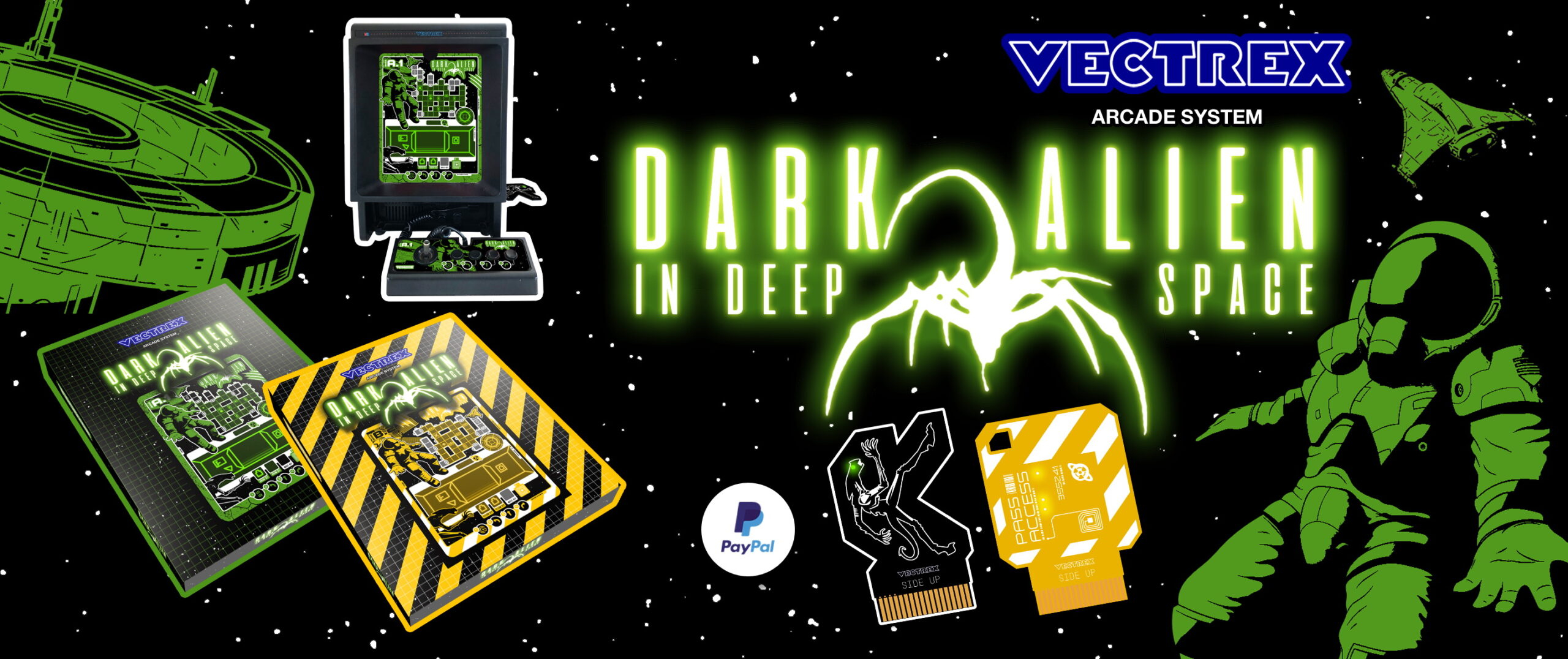
Behind the Scenes: Making the Dark Alien in Deep Space Vectrex Overlay
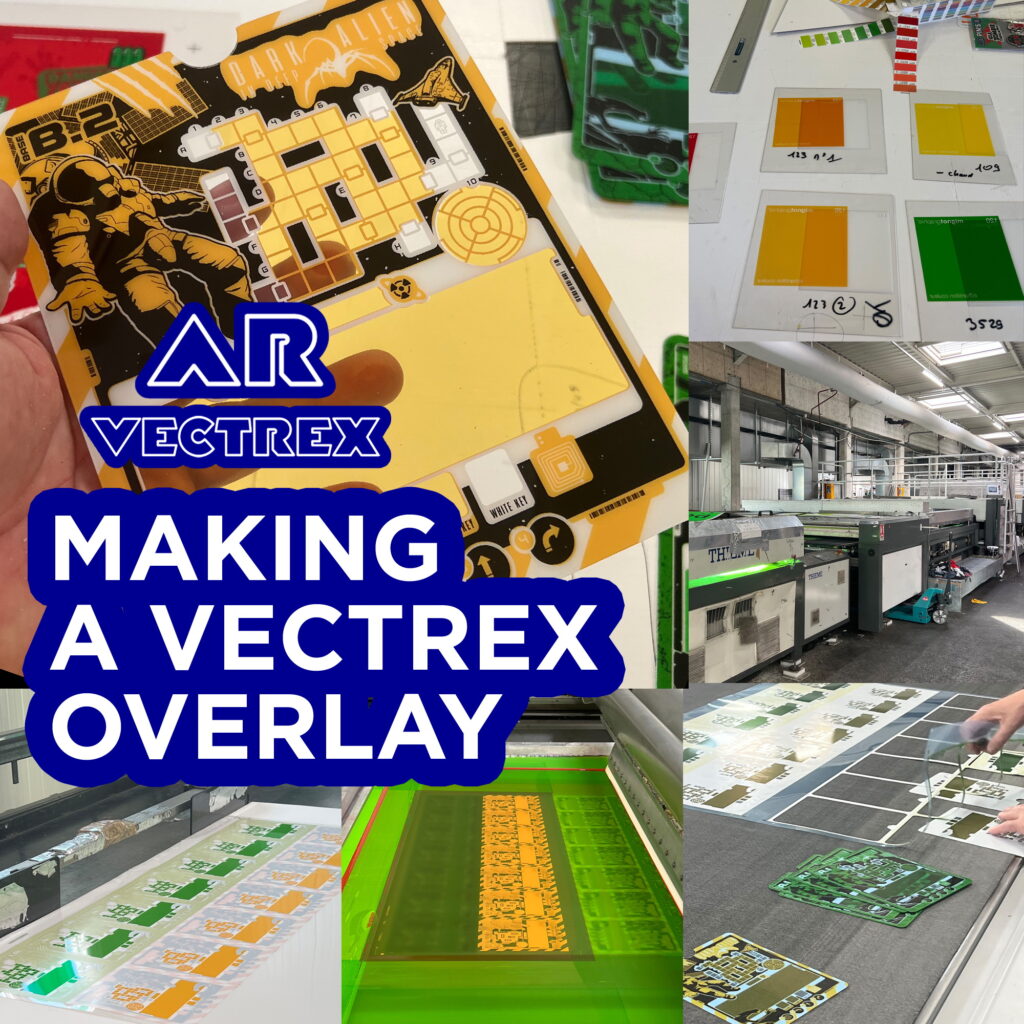
1 – DESIGNING THE OVERLAY TO MATCH THE GAME
The first step in creating an overlay is, of course, designing the gameplay and finding a meaningful function for the overlay within the game itself.
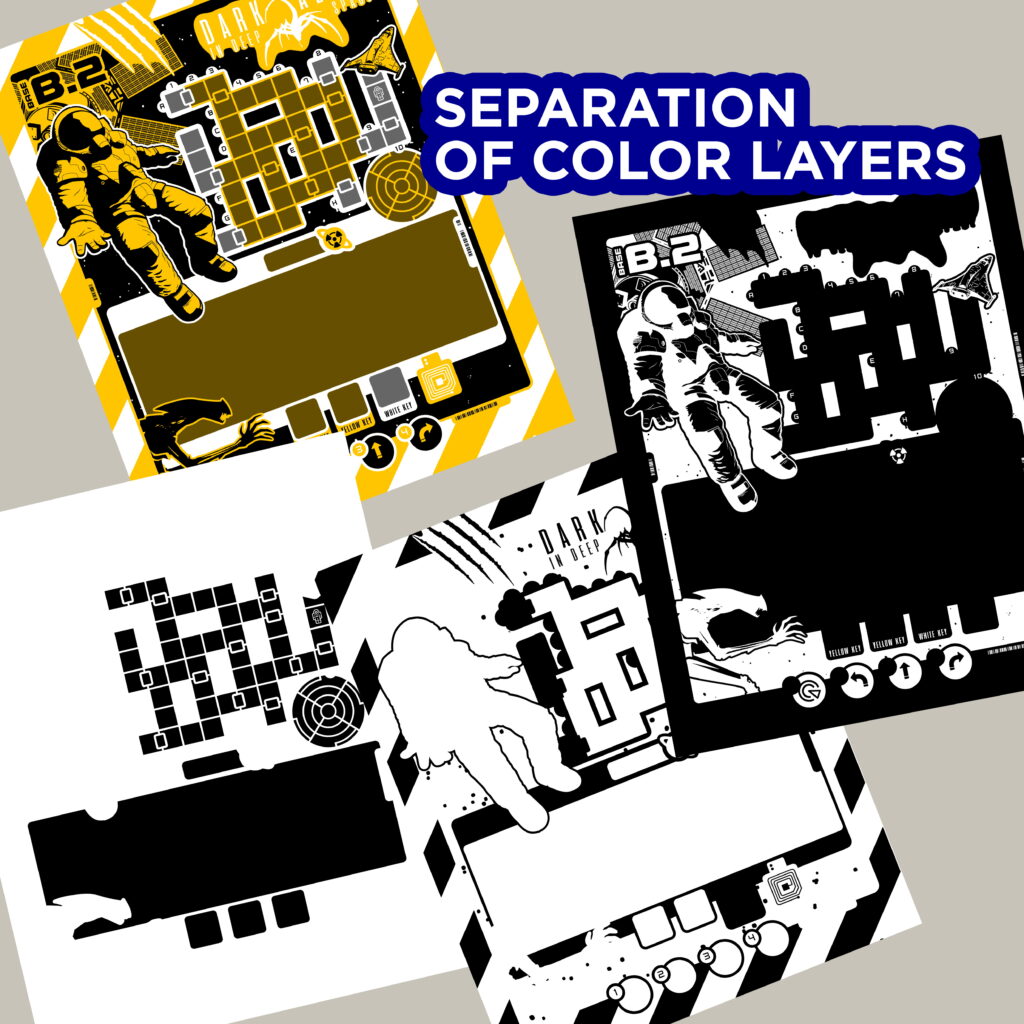
2 – SEPARATING THE SPOT COLOR LAYERS (2 COLORS + SUPPORT WHITE)
The overlay is initially designed as a standard multicolor graphic. The next step is to separate each color into individual layers so it can be printed using spot-color screen printing.
(This step is not necessary if you print in full-color CMYK, but transparency effects are generally less impressive. All AR VECTREX games use spot-color screen-printed overlays.)
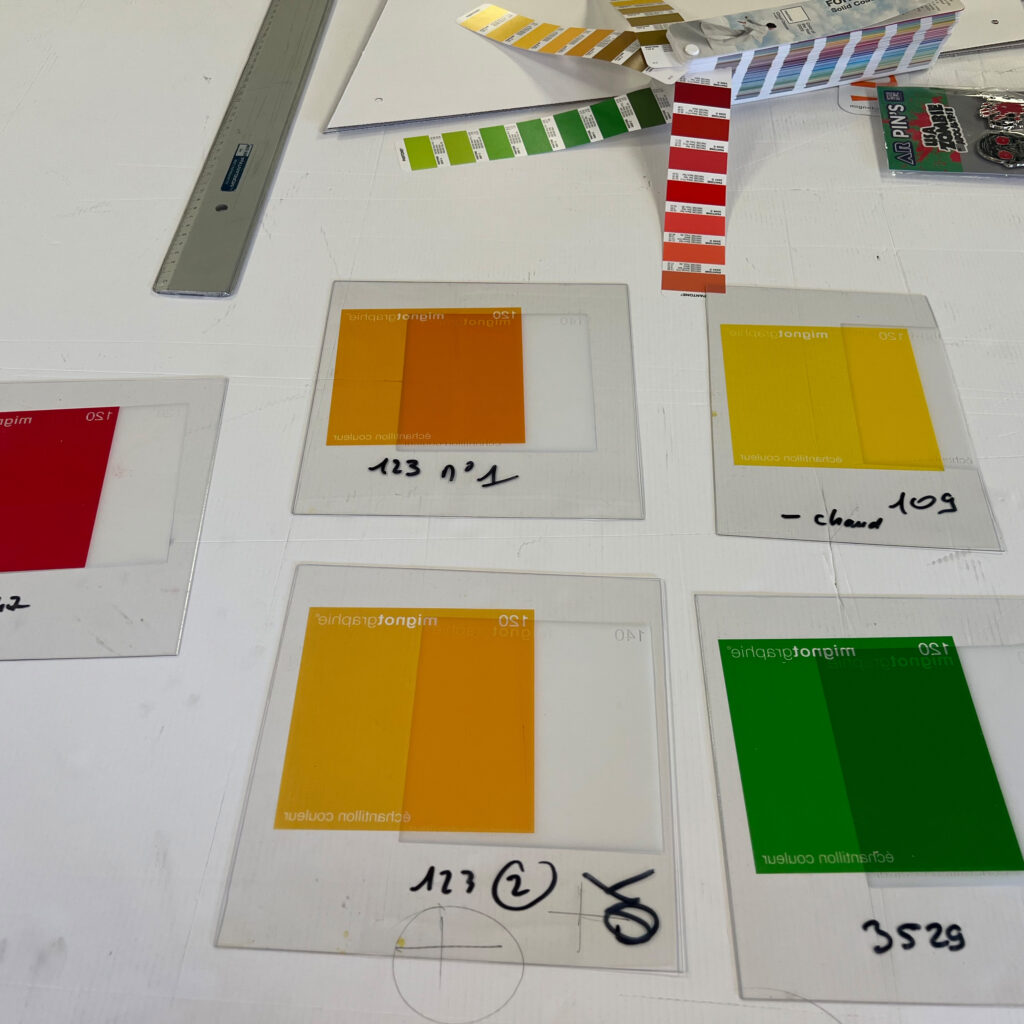
3 – SELECTING AND APPROVING THE COLORS WITH THE PRINTER
Since we print using spot colors, we must provide the printer with precise color references. We use the PANTONE color standard for this purpose.
The printer prepares the inks and produces sample color swatches so we can validate and approve the final colors before production begins.
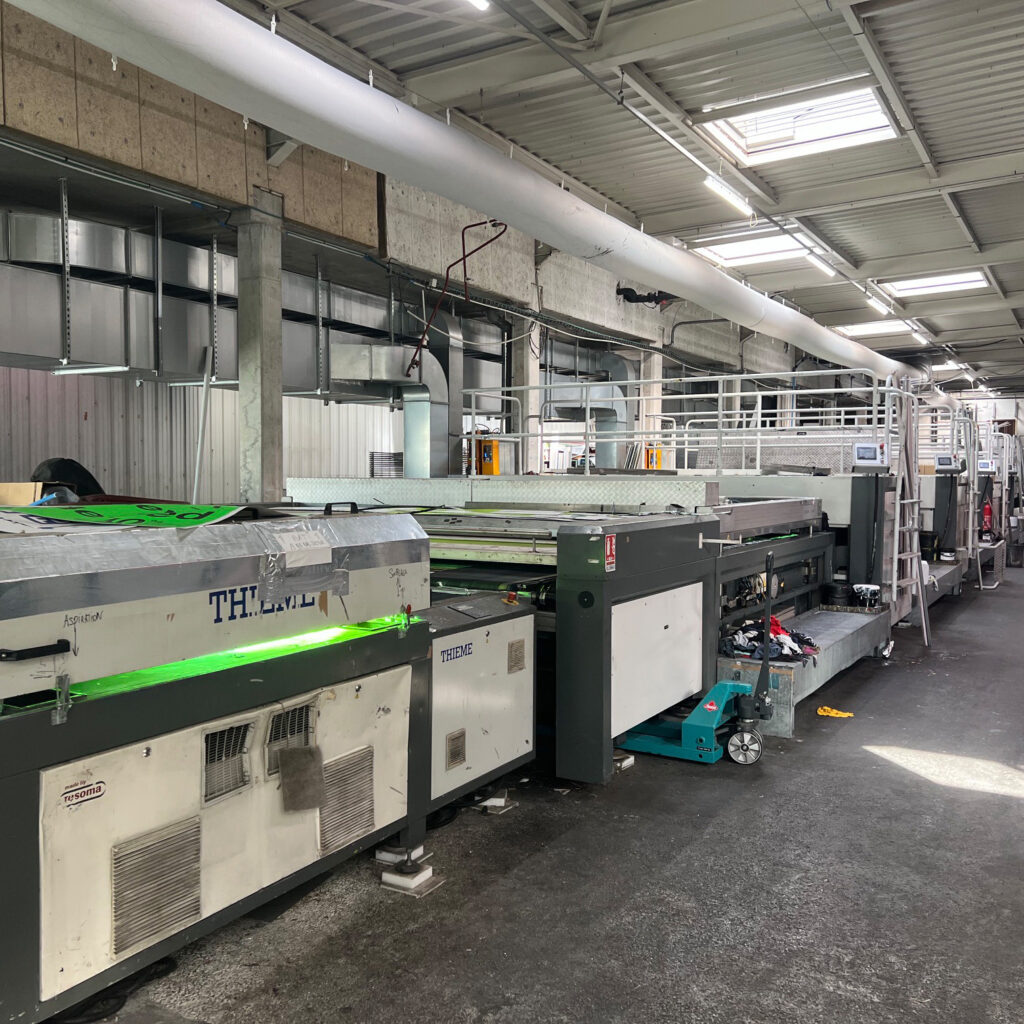
4 – SCREEN PRINTING EACH LAYER
The overlays are printed by a specialist screen-printing company.
The plastic sheets pass through a printing line where each color is applied one after another. The process is completed with a partial support-white layer.
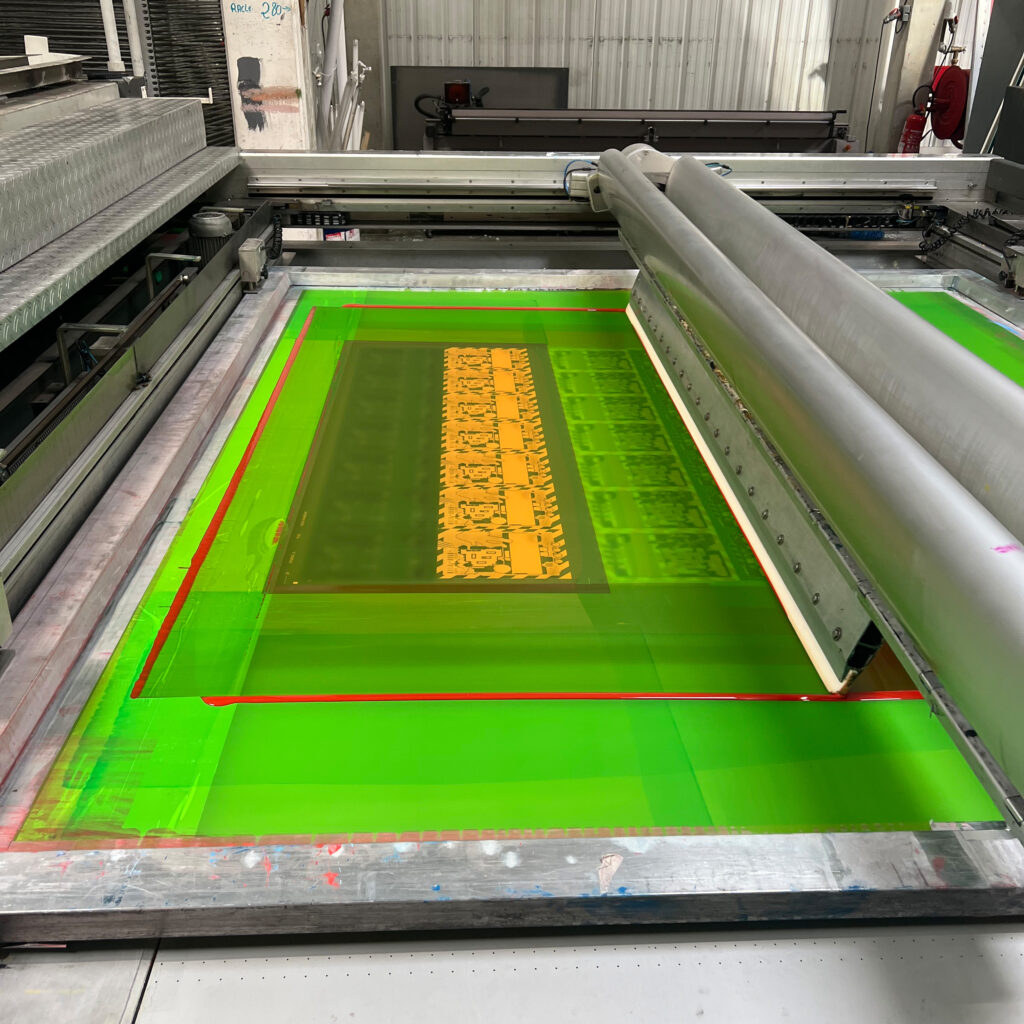
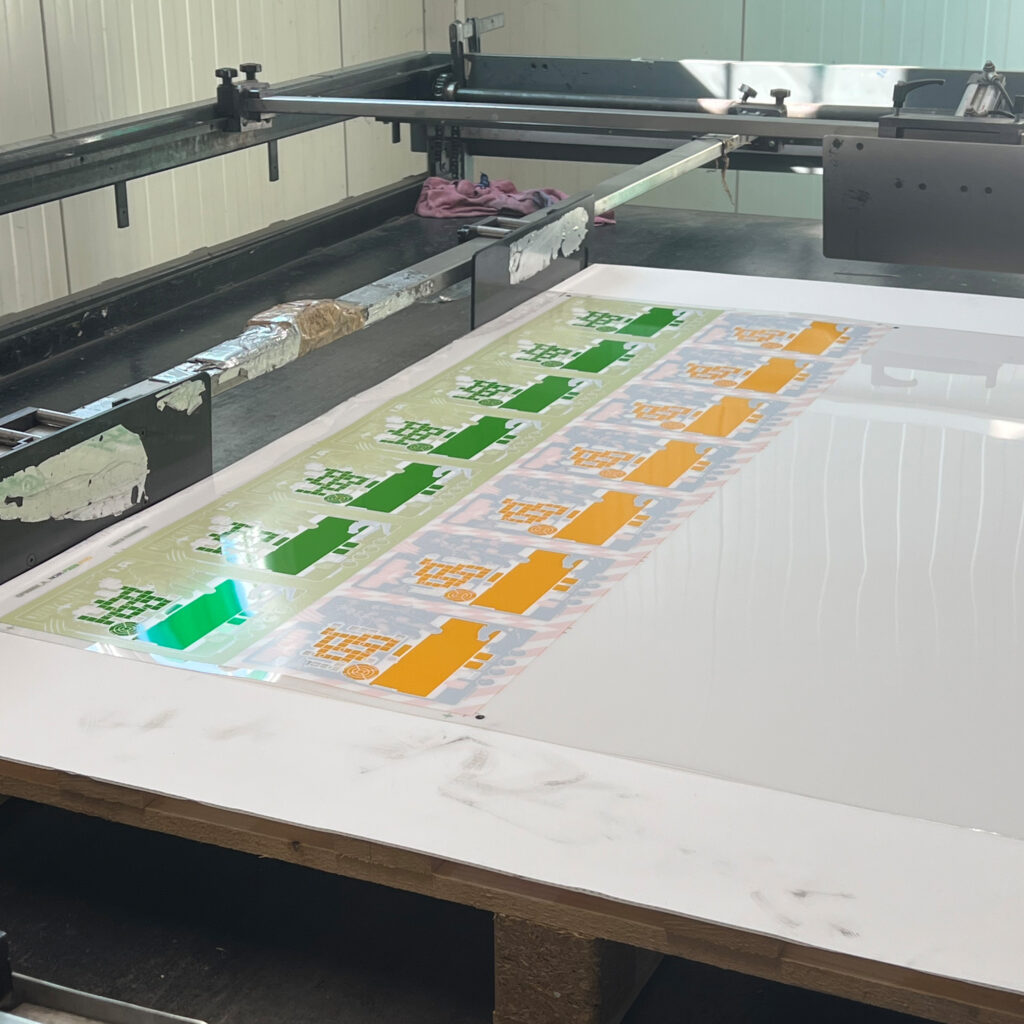
Drying is achieved using UV curing.
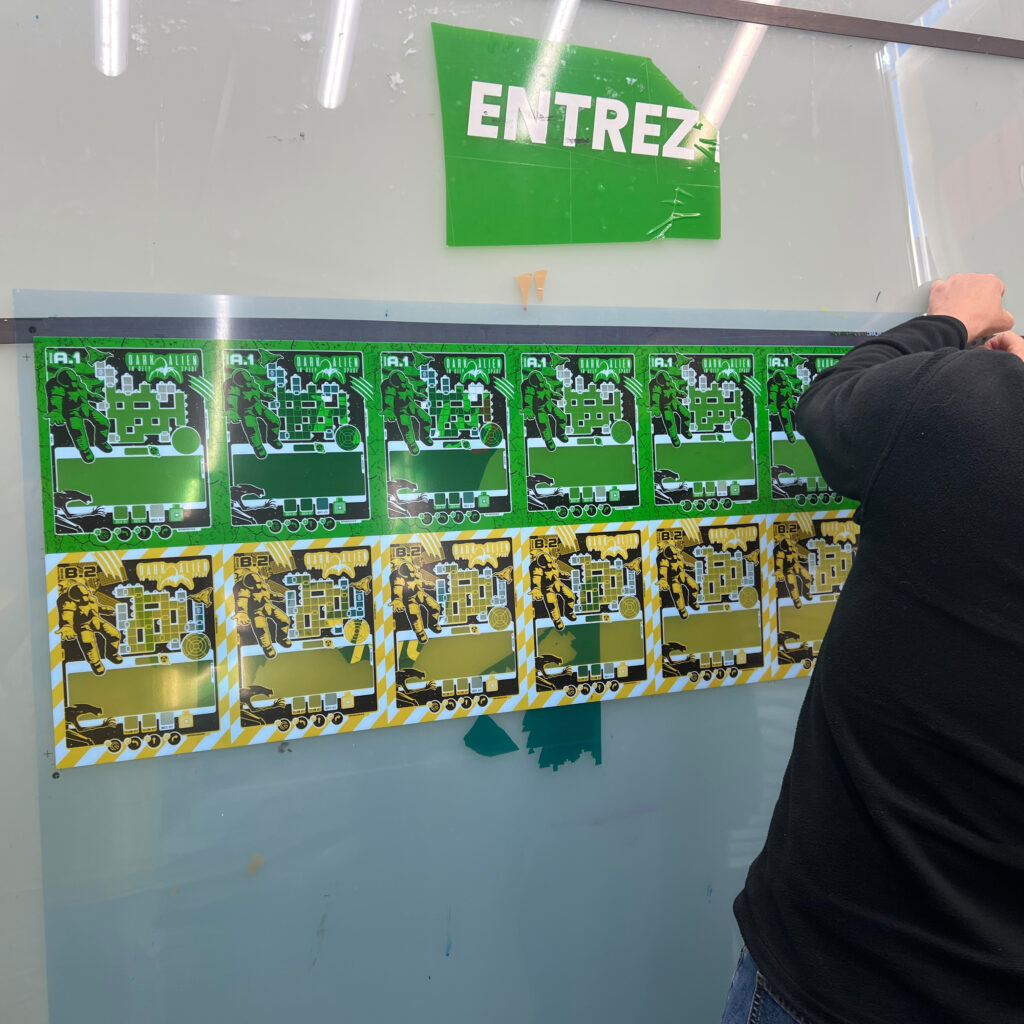
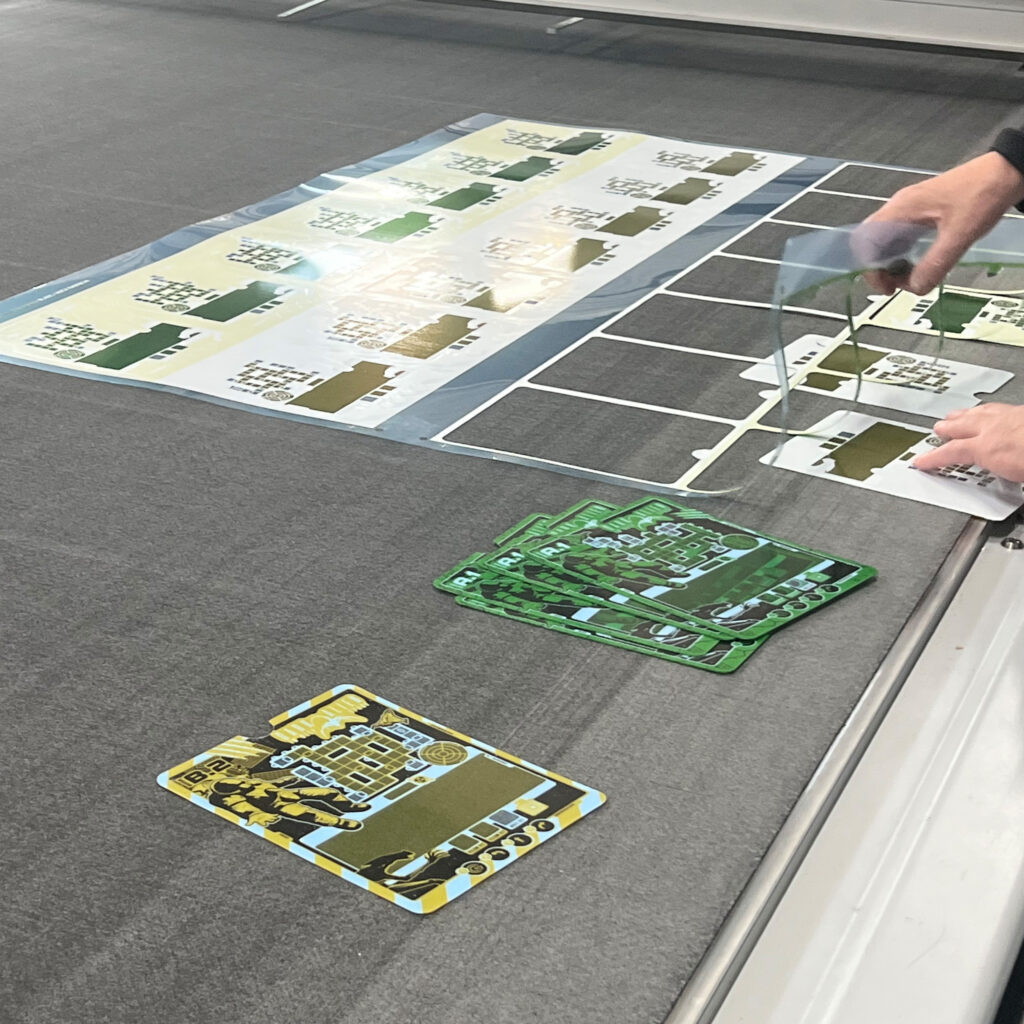
5 – CUTTING THE OVERLAYS
Once the overlays have been printed and fully cured, they are cut to their final shape, one overlay at a time.
6 – APPLYING A PROTECTIVE FILM STICKER
A small sticker is applied by hand to each overlay. This sticker reminds users to remove the protective film before use.
And that’s it—the overlay is now ready to be installed during the game box assembly process.
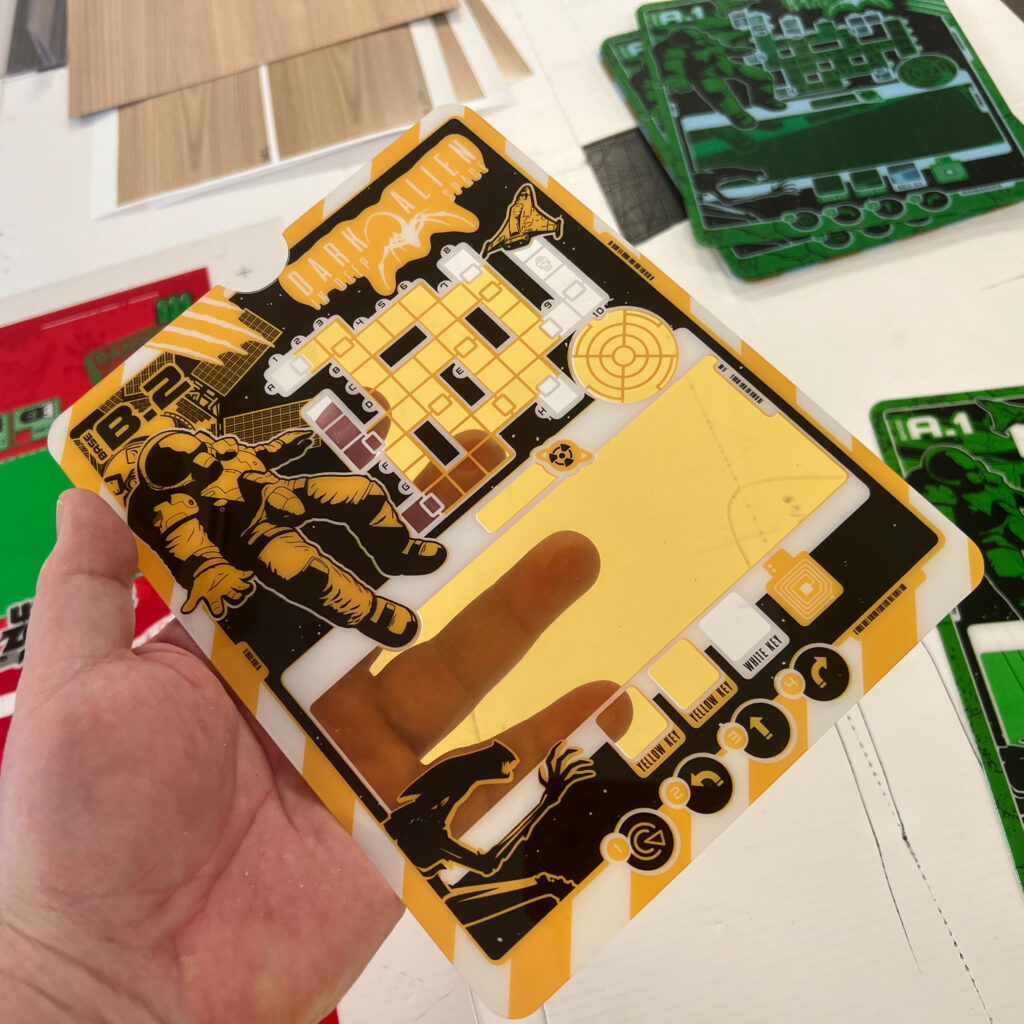
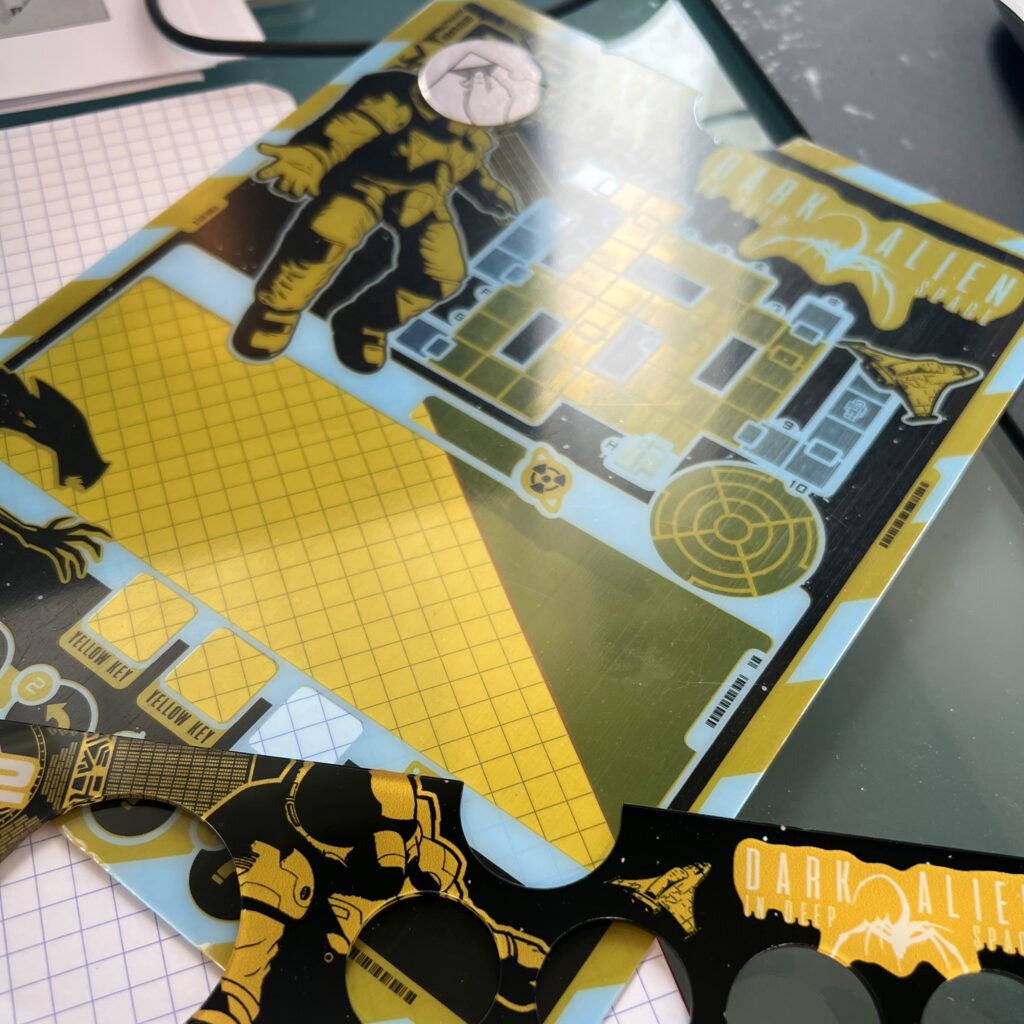
Producing a high-quality overlay is a lengthy and demanding process. It requires precision, expertise, and great attention to detail.
Because of the strict quality standards involved, many pieces are rejected so that only perfect overlays are kept.
We are very proud to offer premium-quality overlays with our AR VECTREX games, and we hope you enjoyed this behind-the-scenes look at how they are made.